In June of 2016, I received a proclamation during pride month from New York City Council Speaker Melissa Mark-Viverito
A version of this post was originally published on October 11, 2016.
As a child of the 70s and 80s, my own coming of age story and admitting to myself (and others) who I truly was—a gay, Puerto Rican male from The Bronx—came at a pivotal moment in history as the LGBTQ community was becoming more accepted and mainstream. Well at least the Ls and Gs of that ever growing acronym were. The Trans community, not so much.
Throughout my childhood and teenage years, from grammar school at St Anselm’s Catholic School where I attended from Head Start through 8th grade (ten years of my life from age 4 to 14) to Cardinal Spellman High School, I always knew I was different.
Since the age of four years old I knew I was not like the others boys growing up around me and many will argue that you can’t possibly know you’re gay at such a young age and that is true because I didn’t have the language to express it yet but I knew.
I knew I didn’t really like girls where little boys would often have crushes on members of the opposite sex, I found myself attracted to the same sex. It didn’t feel wrong.
That is, until I finally learned the language which described who I was.
Maricón. Pato. Faggot.
At a very early age I began to understand what those words meant for growing up Puerto Rican in the South Bronx, we always knew a neighborhood queer man (lesbians seemed more hidden and obscure in those days, at least to me) and even Trans women in the neighborhood or our own families.
Adults oftentimes didn’t think that children were listening as they’re playing with other kids (or they forget they did too when they were young) but we did.
Conversations over domino games while slamming down on the table and yelling ¡CAPICÚ! you would here the occasional, “ese es un maricón” or “pato”. If you were in a park or with other kids then the word was faggot.
Barely in first grade, I was already familiar with the word and what it meant.
At such a young age, I went through an existential crisis that lasted well into my college years at Iona in New Rochelle (yes, another Catholic school).
Every waking moment I was aware of who I was but terrified for others to find out because I didn’t want to be ridiculed or ostracized.
I saw how the few, effeminate boys were treated by all the other kids both boys and girls so quickly learned to blend in and “pass” as best as I could.
During my years at St Anselm’s, I did receive a number of taunts and name calling but they were very rare and I was easily able to ride out the storm at any given moment by laughing along and joking about it to deflect it and not show that it bothered me.
By the time we were approaching our teen years and developing relationships, I had my share of crushes on some of the other boys. Crushes that I had to keep to myself with no one else I could share them with like the other straight kids did—lest my dark secret be revealed.
Even though I attended Catholic school all my life, I saw compassion in the eyes of the teachers and even nuns who witnessed the taunting of gay children. If present, they were quick to reprimand the offender and even washed out their mouth with soap for all to see.
In retrospect, although clearly a cruel form of punishment, it gave some of us gay kids some comfort.
When I reached high school, I went from a small, Catholic school where we knew everyone in our grade, our teachers, and staff to the largest Catholic school in New York City and the archdiocese. Nationally, it’s in the top 100 largest schools and when I entered my freshman year in 1989, I was joined by 5 of my fellow St Anselm’s classmates (out of roughly 50) and thrown in with almost 700 freshman in what then was the largest incoming class in the school’s history.
I found myself excited but at the same time terrified that I had to not just carve out a new life in such a huge and imposing institution, but that also meant I had to go through the rituals of pretending I was straight.
I survived high school, relatively unscathed but the emotional and mental toll on leading a double life was mounting.
At the time, Cardinal Spellman was the only school in New York City that had a full-time psychologist on staff due to the intense pressures we faced as being one of the top high schools in the city, state, and nation.
Where other schools had regents classes as optional, all of our classes were regents, geared towards over 95% of students graduating with a Regents diploma—the top of its kind in the state.
A lot of this led to many anxieties, especially with the incoming classes but on the first day we were always told of where his door was and that all you had to do was knock to see him.
His office was in a relatively low trafficked area of the school so sneaking in without others seeing you was easy.
My freshman year I found myself having panic attacks and throughout my years there, I sought refuge from the stress of performing well as well as my sexual orientation.
I never spoke about it to him out of fear my parents would be contacted but it helped me at an early age, in a borough like The Bronx with many suffering from mental illness, that it was OK to seek help and counseling.
Besides the psychiatrist, there were other faculty members and even members of the cloth who we knew, through unspoken terms, that they were either also a member of the silent LGBTQ community or an ally.
There was an air of relaxation when I spent time in these safe spaces within a Catholic high school as immense as Spellman during my free or lunch periods.
By the time I graduated in 1993, I had somewhat cemented my faux heterosexuality with a few flings and romances but by then I knew that I was gay and had already had many sexual experiences with other gay males.
Celebrating Bronx Pride during the One Bronx Festival in Melrose this summer.
Some of them much older, others my peers.
My heart and soul was gay but I couldn’t show the world.
All of this was happening with The Bronx as a backdrop during the worst of its years as our borough fell deeper into decay and crime was at levels unimaginable to people today who never lived it.
During my freshman and sophomore years in 1990, 653 people were killed in The Bronx alone. Assaults were also at an all time high.
New York City was in utter chaos.
It was that chaos that kept me fearful for being spotted in the streets by roving gangs just looking for trouble (yes, there were roving gangs of other kids always looking for their next victim).
So I always traveled in groups which meant I couldn’t let my true gay self peek through even for a little bit on my daily trek to and from school from my home in Melrose in the South Bronx to Spellman up in Baychester near the Westchester County/NYC boarder.
Although LGBTQ people still face discrimination, back in the 80s and 90s there was absolutely no way to be as out as you wanted to be in the outer boroughs.
We didn’t have safe spaces for LGBTQ teens in The Bronx, at least any that I was aware of and traveling to Manhattan’s gay meccas beckoning with their well-known reputations as gay neighborhoods, meant that even trips to The Village and Chelsea were risqué because back then, “only gays” would hang out there.
Fall of ’93 brought new hope—I was finally an adult and somewhat independent as I entered my freshman year at Iona College and driving to school afforded me even bigger opportunities to seek out others like me.
By my sophomore year in college, I was already more comfortable with my sexuality as a gay man. I no longer cared much if people knew I was gay.
By my junior year in 1995, I was already out to some friends and even my beloved aunt and with each coming out to yet another member of my realm, a weight was lifted, a shackle unlocked.
I began to feel more liberated and comfortable in my own skin and spent all my waking hours on campus or cruising known gay hangouts in Orchard Beach, Van Cortlandt Park and the rest stops of Westchester County.
When I stumbled upon my first gay cruising ground in The Bronx, I was in absolute awe.
Here were men, gay men, having conversations in the open. In The Bronx.
Terror and fascination gripped me as I dipped my toes in the forbidden zone of being seen with other gay men on my home turf of The Bronx.
It was too close to home, too close to my parents.
But into those waters I dove.
I no longer cared to be found out as I relished living a life less and less dualistic and more ME.
The purity of living my life according to my script with the edits by life and its uncertainties was too alluring.
During one of my early visits to “Gay” Orchard Beach, I met many interesting characters, but there was one in particular, who until this day, remains forever nestled in my heart and soul.
We affectionately referred to him as “La Tía”, The aunt.
He whispered to a friend as they both sat on a rock watching me make my way into Hunter’s Island at Orchard wondering who I was, this new addition to the secret club on the Long Island sound.
At that time, I rarely struck conversations with the men—these were places for sex mostly, not for talking—so I was shocked when he spoke to me.
That moment was one of the most important points in my life at the time and now that I look at it, where I am today, I arrived because of those first words.
Once I was comfortable enough with speaking to him, he began asking where I would go to dance, what places I frequented in Chelsea and he was simply aghast in the only way La Tía could, when I said I didn’t.
Quickly, like a den mother, he began rattling off all the places that I needed to go to, providing addresses and even giving me notes (because this was long before cell phones and email was widely accessible to everyone.
Eventually we became one friends,family even, and we would explore the city together and he always encouraged me to be me to be free.
The Bronx’s first pride march in over a decade took place this year in Melrose
He introduced me to Andrew Holleran’s ‘Dancer From the Dance’ which should be required reading for gay men, among other things queer.
He had become my lighthouse in the confusing ocean of what it meant to be a gay man in those years in the 90s but more importantly, that there were many others like me from even my own neighborhood that escaped to these places.
We didn’t have positive, relatable characters on TV or film. Gay men were strictly portrayed as mockeries of themselves so he was a wealth of knowledge and inspiration of the past and present.
He was my first, real, gay friend. A true friend in every sense of the words.
Throughout the decades that followed, he was ever present for my happiest of moments with lovers or just losing ourselves under the disco ball at The Roxy or Twilo with thousands of other gay men dancing in rapture to the being my pillar when faced with the ending of love interest or worse: When I was the victim of domestic violence.
He opened many doors for me and like many others in my life, I owe a lot to him for who and where I stand today.
He was there when I came out to my mother which was one of the most difficult moments for me.
I could no longer hide who I was. I was careless with what I left behind in my room, easily visible to those who looked.
For a long time my mother knew my reality but I denied it and each lie to her destroyed me more and more.
Keeping the double life from those closest to me was ripping me apart.
You cannot fathom what it is like to lead that double life for so long, the web of lies you lay down to cover your tracks.
Then Ellen happened. She came out of the closet in an historic moment in television history. That courageous moment to gamble your entire career was inspiring. What else did I have to lose if Ellen DeGeneres risked it all?
Finally, one summer afternoon while I was in the kitchen making a strawberry smoothie, my mom asked some probing questions and I kept answering pretty sarcastically until I snapped and yelled, “I’M ONE OF THEM! I HANG OUT WITH THEM BECAUSE I AM ONE OF THEM!”
I remember mom asking with dread in her eyes what was it that I was, and I yelled back, “I’M GAY MOM, GAY!”
In that singular moment, what was left of my facade had crumbled with barely anything left.
I felt relieved and yet dreaded for what was left to come. My father.
Deep down I always knew that they would love me, their only son, no matter what.
And love they did. It was a difficult journey for them as well and a journey sometimes we shared but most of the time I kept that part of my life away from them.
Sure I was finally an openly gay man and never again did I hide it but it wasn’t until really the past 10 years that I became more comfortable with sharing my full life with them including my love interests and friends.
In June 2016 for pride month, I was formally recognized by New York City Council Speaker, Melissa Mark-Viverito, for my commitment and activism for our LGBTQ community and received an official proclamation too.
20 years ago when I came out of closet, I never thought my life would lead me to that point—to be at City Hall being honored for that very life I kept hidden during my youth.
When I got up to accept my proclamation, I stared into the crowd and watched my parents who came to the event.
In an instant, I was transported back to the day I came out and remembering my journey as a kid trying to live his life.
My parents and I at City Hall in 2016 when I received my proclamation./Image by William Alatriste
The two people I loved the most and were the ones I dreaded coming out to were sitting there smiling and proud of me.
Never would I imagine that I would share such a special moment with them and I choked up and couldn’t fight back the tears of happiness.
Throughout the years since coming out, my parents showered me with unconditional love but that moment to me was perhaps one of the most important in my life so far for they celebrated publicly me in my entirety as a gay man.
Looking back across the gulf of time, I realize that coming out isn’t something that happens in an instant, at least for me and many others, but it can be a long, drawn out process.
I was fortunate enough to have an amazing support network who stood by my side as well as parents who stayed by my side.
To my dear, queer LGBTQ youth and otherwise who are in the shadows, hiding from your truths and afraid to come out, know that you are not alone.
We are here to help you or listen but most importantly, you come out when it’s the right moment for you. Only you can decide that.
I’m not gonna lie and tell you that coming out is easy or when or how you should do it because each experience, like all of us, is unique.
My love to all the courageous LGBTQ people who have come out and to those who are still in the closet: You are stronger and braver than you think.
Although the MTA is ready to move forward with the planned expansion of Metro North in our borough with the creation of four new stations in the East Bronx, work cannot commence until Amtrak says ok.
Essentially the railroad giant is holding East Bronx residents hostage by demanding “access fees” for the use of its rail—something it doesn’t charge other commuter railroads throughout the country.
Via NY1
Amtrak is already getting a sweetheart deal with MTA upgrading its systems to thr tune of $1 billion.
Bronx Borough President Ruben Diaz Jr and Westchester County Executive George Latimer recently wrote an open letter regarding this issue.
They write:
This project makes a lot of sense for taxpayers at large. They would get a major new project by using Amtrak’s existing underutilized rail line through the Bronx, rather than trying to build a new line from scratch. That will speed construction and hold down costs — assuming everyone works together.
Right now, that is not happening.
For some families in the Bronx and in lower Westchester, Penn Station Access will mean the difference between economic isolation and prosperity. We cannot continue to let Amtrak hold this capital project hostage.
Right now, a series of working groups are being held with Bronx residents and stakeholders for each proposed station so that they are thoughtfully integrated into each neighborhood.
But until Amtrak gets with the program, stations, which are planned for Co-op City, Morris Park, Parkchester/Van Nest, and Hunts Point remain just diagrams and plans.
Three years ago, I publicly came out to our Welcome2TheBronx readers about my battle with anxiety and panic attacks. It was a decision that wasn’t too easy and extremely difficult because I was making myself vulnerable to such a large readership.
Thankfully, it was one of the best decisions I have made, not because it helped me, but because it helped others with their own personal journeys.
Immediately I began to receive a flood of private messages from readers thanking me for coming out about my battle with these mental health issues.
People found solace and felt like they weren’t alone.
My story begins in 2007 shortly before my beloved maternal grandmother passed away. I began to experience my first bouts of anxiety which I didn’t understand. Then came the panic attacks where I would end up in the hospital thinking I was dying with my elevated blood pressure and heart rate.
But nothing was wrong with me, physically at least. Then my grandmother died February of that same year and the panic attacks took a firm grip on my life.
I could not function at my office where I was working as a residential real estate appraiser. Even under the guidance of a therapist I could just not get by each day without some sort of episode.
I felt like overnight my life had come to a crashing halt.
Eventually I had to take a leave of absence from my office and transition to working from home where I could better deal with the battles of these panic attacks without disturbing the workplace.
By then, my doctor said I had to get on long-term medication to help me so I agreed to get on Paxil.
Eventually Paxil worked and the anxiety began to disappear along with the panic attacks.
But there was a downside to the medication especially given the fact that I wasn’t taking it under the guidance of a therapist and or psychiatrist to actually help me get to the root of the problem.
Within a few years my metabolism had slowed down so much that I gained over 60 pounds which brought a host of issues including hypertension and a borderline diabetic diagnosis.
During the summer of 2013 I made the decision to begin getting off of Paxil and try and reclaim my life, after all, I had lived most of my life without this anxiety and panic so I figured I could do so again.
I was wrong.
By September of 2013 I was fully weaned off.
That’s when all hell broke loose and I began getting palpitations, things I couldn’t explain, waking up in panics in the middle of the night and ended up sleeping at my parents each night from September through December until I finally settled in with a therapist.
But getting a therapist and a psychiatrist in The Bronx was and still remains nearly impossible.
“Mental illness refers to a wide range of mental health conditions — disorders that affect your mood, thinking and behavior. Examples of mental illness include depression, anxiety disorders, schizophrenia, eating disorders and addictive behaviors.
Many people have mental health concerns from time to time. But a mental health concern becomes a mental illness when ongoing signs and symptoms cause frequent stress and affect your ability to function.
A mental illness can make you miserable and can cause problems in your daily life, such as at work or in relationships. In most cases, symptoms can be managed with a combination of medications and counseling (psychotherapy).”
But what happens when you live in The Bronx where there are 10x fewer psychiatrists than Manhattan as New York City First Lady Chirlane McCray pointed out in an op-ed piece in Psychology Today.
“According to the U.S. Department of Health and Human Services, in 2012 there were 1,952 psychiatrists in New York City.
When you dig deeper into the data and compare the city’s five boroughs, it won’t come as a surprise that Manhattan is home to the most psychiatrists, with a total of 1,270. Coincidentally, that divides out to approximately one psychiatrist for every 1,270 Manhattan residents.
But what if you live in the Bronx, the poorest county in New York State? The numbers are much different, with approximately one psychiatrist for every 13,100 Bronx residents. In other words, there are 10 times fewer psychiatrists in the Bronx than in Manhattan. And the numbers for other health professionals, psychologists and therapists, are similar.
Sadly, this local example illustrates a broader and troubling reality: The supply of mental health services doesn’t even begin to meet the overwhelming demand, especially in our highest-need communities.”
That became a huge problem for me when I began my search for care in The Bronx for you see, I’m a big proponent of doing things local and basic necessities shouldn’t have to be an obstacle course.
Eventually, I found a perfect match for me within walking distance from my apartment.
It was there that I began seeking and trying to comprehend the source of the anxiety which I never felt before.
I had dramatically lost almost all the weight I had gained and my blood pressure was at levels I hadn’t seen in years.
In order to combat the night terrors I was given klonopin to help me as needed.
In the beginning I used it pretty much each day but as 2014 progressed, I was down to using it every 4 to 5 days maybe even 10 days on a lucky streak.
I was finally seeing progress in the long journey of weaning. Then in March of 2015 I relapsed again.
Eventually I became addicted to klonopin as benzos, the type of drug it falls under, are highly addicting.
The sweet release of that blue pill that it gives you from having to deal with anxiety is heaven. When the pill floods your system you are at peace and nothing can bother you.
From 2015 through early this year I would go from cycles of taking klonopin at the slightest hint of a difficult day to avoid dealing with my issues.
I am not ashamed to say this. I accept my relapse and embrace it for what it is: Something that happens and I must get through and try and be as strong as possible but at the same time I have to learn not to be ashamed or afraid to ask for help beyond my therapist.
But thanks to my therapist we were able to work through the root of my anxiety and to also use coping skills and tools to deal with it rather than turning to klonopin for that quick release.
Eventually I’d go 30 or 40 days without touching it and then I’d fall back into the trap but each time it became easier and easier to escape.
Then in April of this year I took my last klonopin without even knowing it would be my last.
10 days had passed until I realized I hadn’t taken one. I said ok I’m sure I’ll need one eventually. Days turned to weeks, weeks turned to months but I’m happy to say that it’s been six months since I’ve touched klonopin.
This isn’t to say I haven’t had anxious moments or panic attacks, I’ve had a number of those, but thanks to what I learned with my therapist I was able to overcome them without having to rush for the pill.
Mental health issues, from minor to major are still a big stigma in our communities but even bigger in communities of color. This is largely because it is seen as a “white person’s” disease or affliction being that the face of mental illness is white in America.
People easily will dismiss you as weak or just crazy so taking those weekly walks to your therapist and walking into that building is a chore and a stress unto itself because you feel like you’re being judged.
Fact #1) While 1 in 5 Americans live with a mental disorder, estimates indicate that nearly two-thirds of all people with a diagnosable mental illness do not seek treatment.
Fact #2) Twenty to 25 percent of the homeless population in the United States suffers from some form of severe mental illness. Stigma leads to fear, mistrust, and violence against people living with mental illness and their families and causes family and friends to turn their backs on people with mental illness.
Fact #3) Between 25 percent and 40 percent of all Americans with mental illness will at some point pass through the criminal justice system. Stigma leads to prejudice and discrimination and poor treatment of those with mental illness.”
Not only do we need improved access to mental health care professionals in our very own borough but we also need to come out of our mental health closets and be OK and know that we can get help even if it’s limited.
Your support network doesn’t end at your therapist’s office either.
A strong, supportive network of friends and family is critical during this healing process and if you do come out and learn that it’s nothing to be ashamed about they will most likely try to empathize and offer the support you need as best as they can give it.
When I came out to a smaller audience, my load became lighter.
I was free from the stigma because I refused to let it stigmatize me.
Know that you are not alone in these battles and that there are resources out there.
I am writing this in order to help others out there seek the help they need and to know that you aren’t alone.
Let’s end this stigma on mental health and let’s fight for better access to mental health care access in our communities especially those at risk and need.
Sleepy Norwood in the Northwest Bronx has been identified as the next possible hot New York City neighborhood.
But, not for another 50 years.
TimeOut New York decided to make an “educated” guess as to which neighborhood would be hot in 50 years and all signs pointed to Norwood according to a recent article.
We spoke with Warburg Realty agent Kemdi Anosike to get an idea of what sort of infrastructure an area needs to flourish. For the most part, according to Anosike, people are looking for exactly what you might expect: affordability, space, safety and proximity to transportation. The main feature that potential buyers and renters want in a neighborhood? “Parks,” he says. “For the longest time, people have always wanted to be close to the park, no matter which one it is.”
With those parameters in mind, we turned to a 2013 study by the Department of City Planning to gain some insight. That document projects that, through 2040, New York City’s population will grow by 9 percent, with the Bronx boasting a robust 14 percent growth; in the same period, that borough is expected to add 72,000 housing units. In other words, the Bronx is really going to blow up over the next 50 years.
Finding a good deal in the South Bronx is already becoming difficult, but a nabe a bit farther north, like Norwood, seems perfectly poised to peak in about a half century. Right now, housing prices are quite affordable there—in 2017, the median home price was $358,000, according to StreetEasy—so it’s currently in the sweet spot.
A lot can happen in 50 years. Heck, a lot can happen in a few months that would change any of these “predictions” but as gentrification and development continues to creep outwards from Manhattan, it’s only a matter of time before the rest of the borough and NYC is swallowed up.
The Nonhuman Rights Project filed a lawsuit earlier this week to free the 47 year old Happy the Elephant from The Bronx Zoo where she’s been held in captivity for most of her life since the 1970s.
According to the group, they allege (and are probably quite correct) that Happy is unhappy given the fact that elephants are social animals who live in social groups and she’s alone at the zoo.
They also walk 20 miles a day in the wild but that’s something she doesn’t even get a fraction of.
For much of her life, Happy did have a partner—Grumpy, another Asian elephant who was captured along with five other calves in the 1970s, and eventually landed with Happy in the Bronx. But the zoo’s two other remaining elephants, Maxine and Patty, charged Grumpy in 2002, fatally injuring her and leaving Happy all alone. Happy was then briefly paired with a young elephant named Sammy, who soon after contracted a liver disease and was euthanized—the zoo’s third elephant death in just four years, according to the Times.
In the past, animal advocacy groups have accused the Bronx Zoo of mistreating its elephants, citing cold winters and cramped cages, as well as Happy’s isolation. But the zoo has countered that Happy shows “no signs of physiological or psychological stress,” and maintains a close bond with her caretakers. Abruptly severing that bond by sending Happy to an animal sanctuary could be traumatic, according to the zoo’s conservationists.
“The Nonhuman Rights Project is exploiting the Bronx Zoo elephants to advance their own failing cause in the courts as they put forth ludicrous legal arguments and lies about our elephants, facilities and staff,” Bronx Zoo Director Jim Breheny said in a statement to Gothamist.
We do believe that Happy is attached to her handlers so any decision would have to be cautious in helping her situation if she does get her freedom. What would that mean for Happy who’s attached to her humans and they’d have to be separated?
The answers we think we know aren’t always clear.
Whatever happens, let’s hope Happy ends up truly Happy.
We are currently experiencing intermittent outages on our website which you may have noticed over the past couple of days.
The reason? Thanks to you, we are growing faster than anticipated and have had to upgrade our server capacity several times this year.
This is a problem we would encounter just once a year with steady growth but 2018 has proven to be a landmark year for Welcome2TheBronx.
None of this could have been done without our loyal readers like you so thanks for crashing our servers!
Our web department says we should be running smoothly now but if you experience any hiccups and/or slow downs, do know that we are working diligently to make sure your experience on our site is great!
Applications are now being accepted for a new affordable housing development for seniors in the West Farms neighborhood of The Bronx.
Located at 1880 Boston Road just one block south of the West Farms/East Tremont subway station on the 2 and 5 train, the 10 story development features 14 studio apartments and 44 one bedroom units.
Amenities include on-site social services, a computer lounge, yoga room, fitness center, community room, laundry room, and even an arts and crafts room.
Qualifying applicants must have at least one household member who is 62 years of age or older and meet the income requirements which, under the Extremely Low and Low Income Affordability Program (ELLA) is from $0 to $36,550 for a one person household and $0 to $41,750 for a two person household.
All eligible tenants are required to qualify for Section 8.
With the L-pocalypse just 15 months away as shutdown of the L train creeps closer renters choosing not to hunker down for the 15 month in Williamsburg and Bushwick are already looking for alternatives.
Mott Haven in The Bronx has been listed as a somewhat comparable neighborhood to Bushwick (along with Chinatown and Red Hook) for those seeking relief from lack of subway service for over a year.
“The South Bronx waterfront, where hip-hop was born, is booming with new construction as thousands of units are expected to come on line in the next years,” Halpern said. “An influx of new residents are expected as are amenities, retail and much-needed city investment in infrastructure and services. No wonder this has been regarded for some time as one of the hottest neighborhoods in New York.”
HOW IT STACKS UP IN OTHER WAYS:
Longer commute.
It takes a bit longer to get Downtown. Theaverage commute time to the Financial District is 56 minutes compared to Bushwick’s average commute time of 43.5 minutes. But that longer commute could score you lower rent.
This mural in Mott Haven from three years ago seems to have foretold what’s coming with the L-pocalypse
Fledgling restaurant and bar scene. Trendy spots along the South Bronx waterfront include the Bruckner Market food hall, a former warehouse that will resemble Chelsea Market with a rooftop beer garden and a variety of takeout and sit-down restaurants. Harlem’s Milk Burger, a gourmet burger joint similar to Shake Shack, opened in late 2016. It joined spots like Filtered Coffee, Charlie’s Bar & Kitchen, Ceetay Sushi, and the Italian restaurant La Grata.
The upscale pub at Port Morris Distillery recently opened on East 133rd Street and the Bruckner Market may also house a microbrewery. Together, with Tirado Distillery and Bronx Brewery, there’s a burgeoning craft beer/distillery scene. Creative commercial space coming by 2019. A large new development on the Third Avenue waterfront will include 20,500 square feet of retail space and 1,100 square feet of community facility space. Other commercial developments are aimed at attracting tech and design tenants.
New LGBTQ community center opening in neighboring Melrose.
This center will be one of the few hubs of LGBTQ services and programming in the Bronx. Slated to open shortly in The Hub shopping district, it will offer a wide variety of health and human services and work to address issues like job training, bullying, housing, and arts and culture.
More open space than Bushwick.
Mott Haven got higher marks for access to open space than Bushwick. The neighborhood’s St. Mary’s Park is getting a much-needed overhaul, with construction finishing in late 2019. Its rec center will be reconstructed by mid-2019, and the Parks Department plans to add new programming and activities. A partly vacant playground will get new basketball and tennis courts, play equipment, seating areas, and new landscaping by around the same time.
The L-pocalypse won’t be just harming Brooklyn but will simply help speed up gentrification in the outer boroughs as thousands flee from the shutdown.
Read the full story and see which other neighborhoods made the list over at Localize.city.
The transformation of the Sheridan Expressway from a highway to a tree-lined boulevard just took a leap closer to becoming a reality.
The federal government has given the green light for removing the designation of the expressway as an interstate which will allow the state to proceed with plans to convert this stretch of road in The Bronx into a boulevard.
This will remove the barrier that is the little used roadway and provide easier and safer access to the Bronx River and surrounding greenways.
While this is all nice and looks cute on paper, the problem still remains of where to place the ramp into Hunts Point.
The Cuomo administration insists on placing the ramp at Edgewater where it will cut of communities and cause more pollution in an area that is saturated with heavy truck traffic already.
It literally defeats the point of tearing down the Sheridan and is a slap in the face to the community. A literally “We don’t care” from Cuomo.
Oakpoint is where the ramp needs to go which will allow for direct truck access into the industrial heart of Hunts Point and not running through its residential core further exacerbating deadly conditions.
So thanks for the cute renderings but they’re worthless in the face of potential lives lost if the ramp is placed on Edgewater.
According to Curbed, construction on the $75 million Sheridan plan is expected to begin by the end of this month.
Now that the Soundview Ferry service is in full swing, the New York City Economic Development Corporation needs your input on where to look into for possible future ferry landings in The Bronx and across the city.
We have already written several pieces on what a future expansion could look like so we’re glad that we’re being given an opportunity to officially voice our opinion on the matter.
This is an excellent opportunity for residents of the East Bronx, particularly in Throggs Neck, Country Club, and City Island to push for such a service should they want it in their backyards.
It’s also an excellent opportunity for South Bronx residents to fight for additional services that will help alleviate the situation on our transit options which are crumbling at the moment.
Personally, we feel one of the best recommendations we can make is a direct service into Queens and Brooklyn skipping Manhattan altogether.
It looks like you can make multiple suggestions (for now) so take full advantage!
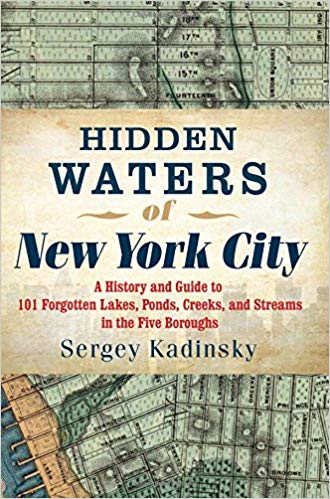
The following was originally published over at Hidden Waters Blog, a companion blog to the amazing Hidden Waters of NYC book by Sergey Kadinsky, and reprinted with permission.
Among the streams feeding into the East River that flow through the Bronx, Pugsley Creek is obscure, with little information available on its history. All that remains of it today is an inlet of the East River that used to penetrate much further inland.
The present head of this stream is deep inside Pugsley Creek Park, a 50-acre sanctuary of plants and wildlife separating the Soundview and Castle Hill neighborhoods.
Where it Flows
Prior to urbanization Pugsley Creek originated from several sources in the Soundview section of the Bronx, gathering together into a winding stream that widened into a salt marsh on its way to the East River. The route of Soundview Avenue predates the street grid, running atop the spine of Cornell’s Neck towards Clason Point. As with these two names, Pugsley was a landowner in this area in the 19th century. The name also appears on Pugsley Avenue that runs through the area. On the neck between Pugsley Creek and Westchester Creek, today’s Castle Hill appeared on the 1891 Joseph Bien map as Unionport. Its grid would eventually cover much of southeastern Bronx.
The 1941 Barkan Street Directory map shows the planned grid in its entirety mashed with the natural courses of Bronx River, Pugsley’s Creek and Westchester Creek. A trolley line runs down Soundview Avenue and the elevated subway line atop Westchester Avenue. In yellow I marked Eastern Boulevard, the forerunner of Bruckner Expressway, which touches the headwaters of Pugsley Creek.
Progress on Pugsley
This slideshow requires JavaScript.
Using the aerial surveys available on the DoITT NYCity Map, I compered the landscape around Pugsley Creek in 1924, 1951, and 1996. Lacombe Avenue, which today marks the innermost extent of the stream is marked in yellow. What was a rural retreat of farms and amusement parks in 1924 was being filled in 1951 in anticipation of development. On the east side of Ferry Point, Baxter Creek Inlet was entirely filled in favor of a proposed beach. Instead the landfill here lay unused until the Trump Organization stepped in to clean it up in favor of a golf course.
By 1996, Pugsley Creek assumed its present shorelines. On the inland side of Lacombe Avenue are superblocks atop the landfill that host Adlai E. Stevenson High School and its athletic field, Stevenson Commons apartments, and P. S. 182.
Since 1996 the empty lots atop the filled creek have been covered by residences but on Bolton Avenue there’s still an undeveloped block whose presence relates to Pugsley Creek.
On this expanse of superblocks the former Newman Avenue is marked as Stickball Boulevard. During the summer the street is closed to vehicles on Sundays and reserved for “poor man’s baseball” of a sawed-off broomstick and Spaldeen handball. The sport dates to the prewar years of the inner city, before the eponymous Stickball Boulevard existed. The street is co-named for stickball aficionado Steve Mercado, a firefighter killed on 9/11.
Pugsley Creek Park
The acquisition of remaining land along Pugsley Creek Park into a park occurred in piecemeal fashion. A trail was dedicated in this park in 2009. There is not much else to do here besides biking, walking and bird watching. The entrance to this trail is on Lacombe and Pugsley Avenues.
One more map: a 1975 planning chart that shows the park’s borders. Note the dead-end knob off Lacombe Avenue. That’s a piece of Barrett Avenue with a couple of addresses on it that was developed while everything around was empty. That’s how this piece of Barrett was preserved while the rest of this mostly planned street was demapped and absorbed into the park. At the head of Pugsley Creek were a proposed sewage treatment plant. It was instead built at Hunts Point.
Inside the park it is easy to spot where the stream flowed in the form of ravines. Unfortunately there are still too many discarded tires and shopping carts littering this “forever wild” preserve.
The vines and tree branches of the ravine widen into a salt marsh that floods in high tide. salt marsh cordgrass and phragmites are the dominant plants here. Is this land or water? Between the two categories, this is a wetland.
In turn the salt marsh widens into a visible stream. At sea level this surface section of Pugsley Creek is really an extension of East River with little water flowing into from the historic Pugsley Creek watershed. There is one Combined Sewer Outfall (CSO) pipe that discharges into the creek in the event of heavy rainfall.
Near Castle Hill Point is a scenic staircase descending to the creek. Such a structure is more recognizable on an upscale waterfront estate but this is a public park and anyone can sit on its steps and admire the view. Behind the stairs is Pugsley Creek Park and in the foreground is Castle Hill Park.
Best of all, the entrance to this staircase includes an informational sign about the creek and its native wildlife. The sign depicts the native wildlife: canvasback duck, fiddler crabs, ribbed mussels, and snowy egrets. The sign was installed as part of a city-state salt marsh restoration project during the Bloomberg administration. Between 1928 and 1985 land at the tip of Castle Hill was the site of Castle Hill Beach Club. Like nearby Shorehaven, this was a private resort that had a sizable pool but did not have an actual beach on the creek.
On Facebook former members of the club share photos and memorabilia spanning three generations. Above, group administrator Marc Miller made a collage for Castle Hill Beach Club. By the time that the club had closed in 1985, Pugsley Creek was sorely in need of restoration as runoff and illegal dumping had degraded the once-pristine waterway. At the turn of the millennium the site of the club was developed as tract housing, giving a suburban look to this corner of the Bronx.
In the view above towards the tip of Castle Hill, we see the East River and Clason Point on the right side. Across the East River in the background is Queens. On the eastern side of Castle Hill Point facing the mouth of Westchester Creek, the Bronx YMCA maintains its waterfront presence. Like old beach clubs nearby, it also had an outdoor pool overlooking the East River. To continue along Westchester Creek, you can read my history article on it, or Nathan Kensinger’s Curbed photo essay on the stream.
Sergey Kadinsky is the author of Hidden Waters of New York City: A History and Guide to 101 Forgotten Lakes, Ponds, Creeks, and Streams in the Five Boroughs (2016, Countryman Press) and the webmaster of Hidden Waters Blog.
He is a licensed tour guide who paid his way through college atop the double-decker Gray Line buses.
Kadinsky is a contributor to Forgotten New York, a local history website. His articles on the city’s history appeared in New York Post, New York Daily News, and Queens Chronicle, among other publications.
Read more fascinating New York City history in Sergey Kadinsky’s book! (click to purchase)
The construction boom across NYC and The Bronx is rapidly transforming our borough and now a new report shows that the South Bronx neighborhood of Melrose had more new residential units approved than any other in the borough.
In fact, Melrose placed third in New York after Long Island City and East New York according to a new report by Localize.city.
Between July 1, 2017 and July 1, 2018, a total of 1,027 units were approved in Melrose as per the report which indicates that these units are slated to open starting 2021.
Bronx Common’s Bronx Music Heritage Center which is under construction in Melrose
During the last census in 2010, Melrose was identified as the third fastest growing neighborhood in New York City and that doesn’t seem to have let up so it will be interesting to see what happens in the upcoming census.
Just take a walk through the neighborhood and you’ll see cranes and construction sites everywhere including the massive La Central which will have just under 1,000 units and Bronx Commons which will house the Bronx Music Heritage Center.
As for the rest of the borough, seven of the top twenty neighborhoods on the list were in The Bronx and are as follows:
Melrose, 1,027
Mott Haven, 733
Crotona Park East, 731
East Tremont, 705
Longwood, 560
Bedford Park, 470
Tremont, 417
La Central, currently rising, will have just under 1,000 residential units spread across 5 buildings from Westchester Avenue to 153rd Street.
Just these neighborhoods alone have 4,643 units that have been approved during that cycle, greatly adding to the inventory in our borough.
Localize.city reports:
Bronx is ascendant
All of the neighborhoods Localize.city identified as seeing the biggest uptick in permits this year — in addition to East New York — were in the Bronx. Bedford Park, for example, saw more permits filed in the first half of this year than in all of 2017.
From 2010 through 2015 (including 2015), about 13 percent of the city’s approved residential units, on average, were in the Bronx. Drilling down further in this time frame, in 2014 and 2015, only about 8 percent of the approved units were in the Bronx. However, since 2016, the borough saw its share of construction bloom. The number of approved units in the borough jumped to more than 23 percent in 2016; in 2017, the Bronx had 24 percent of the approved new units; and in the first half of 2018, it had 27 percent of the approved new units.
“Here’s another way to look at the shifts: over the last 2.5 years, about 12,000 units were approved in the Bronx, which is roughly the same as in Manhattan,” Schwartz said. “For reference, in the six years between 2010 through 2015, Manhattan had almost triple the number of approved units: 38,580 compared to the Bronx’s 13,438.”
We’ll certainly see these numbers increase considerably once developers begin redeveloping swaths of the Jerome Avenue Rezoning Area as well as over in Mott Haven’s Lower Concourse Rezoning Area in Mott Haven which is heating up.
The character of our borough is changing and while some say it’s for the best, we don’t necessarily buy into that.
Bronxites who need the affordable housing the most that’s being constructed aren’t the ones qualifying.



 Conversations over domino games while slamming down on the table and yelling ¡CAPICÚ! you would here the occasional, “ese es un maricón” or “pato”. If you were in a park or with other kids then the word was faggot.
 Even though I attended Catholic school all my life, I saw compassion in the eyes of the teachers and even nuns who witnessed the taunting of gay children. If present, they were quick to reprimand the offender and even washed out their mouth with soap for all to see.


 I felt like overnight my life had come to a crashing halt.


 Amenities include on-site social services, a computer lounge, yoga room, fitness center, community room, laundry room, and even an arts and crafts room.
 All eligible tenants are required to qualify for Section 8.